About Camera Mouse
Camera Mouse is a free program that allows you to control the mouse pointer on a Windows computer just by moving your head. Clicking can be done by making the mouse pointer dwell over a spot on the screen (after first turning Clicking on in Settings).
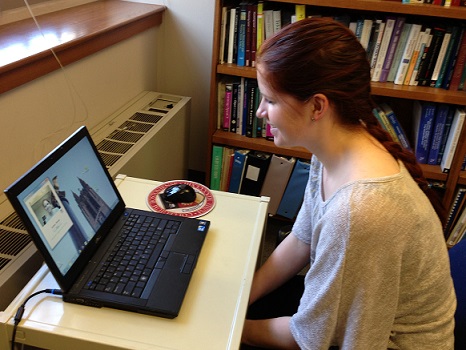
The program was developed at Boston College to help people with disabilities use the computer. The main audience for this program is people who do not have reliable control of a hand but who can move their head. People with Cerebral Palsy, Spinal Muscular Atrophy, ALS, Multiple Sclerosis, Traumatic Brain Injury, various neurological disorders use this program and its predecessors to run all types of computer software.
Camera Mouse works as a mouse replacement system for Windows computers and tablets so it should work with just about any application program. For example people use Camera Mouse with entertainment programs, education programs, communication programs, web browsers, and so on. (See the Downloads page for some of the programs and websites that we have used with Camera Mouse.) Camera Mouse works best with application programs that require only a mouse and a left click and that do not have tiny targets. It's easier to use Camera Mouse with application programs that do not require extreme accuracy.
What equipment is required? A Windows 10, 8.1, 8, 7, Vista, or XP computer or tablet and a built-in camera or standard USB webcam. We do our development work with a Microsoft LifeCam Studio and a Logitech HD Pro Webcam C920. However the much less expensive Microsoft LifeCam HD-3000 and Logitech HD C270 work well also. Camera Mouse should work with any built-in camera or USB webcam.
This program is available for free download. Support for our work has come from the Philanthropy Committee of Mitsubishi Electronic Research Labs (MERL) and the Mitsubishi Electric America Foundation. Major continuing support for Camera Mouse comes from Boston College. Camera Mouse is part of our mission of education, research, and service.
The original idea for Camera Mouse was developed by Prof. James Gips (Boston College) and Prof. Margrit Betke (then at Boston College, now at Boston University). Here are copies of papers on the original Camera Mouse from the 2000 RESNA Conference [pdf] and from IEEE Transactions on Neural Systems and Rehabilitation Engineering in 2002 [pdf]. Many students have contributed to the development of Camera Mouse.
For several years the Camera Mouse technology was licensed by Boston College to a start-up company called Camera Mouse, Inc., with headquarters in Texas. They developed a commercial version of the program that they sold for $395. The company could not sell enough copies to be profitable.
With the demise of the company and the revocation of the license by Boston College, we decided to develop a new version of the program and make it available for free. Under contract from Boston College, Donald Green developed and implemented Camera Mouse 2007. Don expanded Camera Mouse 2008 to work with a wider variety of commercial webcams. Camera Mouse 2009, 2010, and 2011 are much smaller downloads and work on computers with multiple video sources. In 2009-2010 Sophia Yen advised us on how to put the whole Camera Mouse project on a strategically sound path. Under contract from Boston College, Don Green and Christine Hsu Nason of OpCode Consulting and Matt McGowan did a complete rewrite for Camera Mouse 2012. Camera Mouse 2013 improved tracking. Camera Mouse 2014 was designed to work more smoothly with Windows 8 and 8.1. Camera Mouse 2015 works with Windows 10. Camera Mouse 2016, 2017, and 2018 add some features requested by users, for example a Pause feature, right-clicking, and an improved way to specify an Exclude zone.
The latest version is Camera Mouse 2018 version 1.1 released January 17, 2018. Manual dated December 14, 2017.
There have been more than 3,300,000 free downloads of Camera Mouse since the program was made available in June 2007.
Please address any questions or suggestions to james.gips@bc.edu.
Contact Camera Mouse
|
James Gips |

|
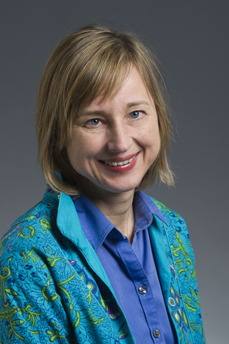
Margrit Betke |
Please address any questions or suggestions to james.gips@bc.edu.